
If you’re working as a personal trainer, or planning to become one, you’ll need to understand how CEUs work.
They come up when you first get certified, and they continue to matter throughout your career. But they’re often explained in a way that feels vague or overly technical.
This guide breaks it down simply. What CEUs are, how they work, and how to use them in a way that actually improves your coaching – not just your paperwork.
What Is a CEU?
CEU stands for Continuing Education Unit. It’s a way of tracking the further study and education you complete after your initial certification as a personal trainer.
Most certification bodies require you to earn a set number of CEUs within a specific time frame, usually every two years, to keep your certification active. In simple terms, CEUs show that you’re continuing to develop as a coach, not just relying on your entry-level qualification.
Why Do Personal Trainers Need CEUs?
CEUs aren’t just about meeting a requirement. They influence how you coach, the types of clients you can work with, and how your career develops over time.
1. Maintain Your Certification
Most major certification bodies like the National Academy of Sports Medicine (NASM), American Council on Exercise (ACE), and Athletics and Fitness Association of America (AFAA) require you to complete a set number of CEUs each renewal period, usually every two years, to keep your certification active.
If you don’t complete them, your certification can lapse, which can impact where you can work and your ability to stay insured.
2. Keep Your Coaching Up to Date
What you learn in your initial certification is a starting point.
Continuing education helps you stay up to date with current training methods, updated research, and better ways to structure programs. That’s especially important as client expectations and industry standards continue to evolve.
3. Improve How You Coach
This is where CEUs should make a real difference.
Delivering better coaching isn’t simply about knowing more theory, it’s about how you apply it with clients. Choosing the right exercises, progressing clients effectively, and adapting when something isn’t working.
Good CEU courses help you build those skills and continually improve on them over the course of your career.
4. Expand the Clients You Can Work With
As you build your education, you’re not limited to one type of client.
- General population clients
- Clients returning from injury
- Pre- and postnatal clients
- Older adults
- Clients with more specific performance or physique goals
That flexibility is what allows you to grow your client base and your income over time.
How Do CEUs Work?
The process is fairly straightforward. CEUs are earned through approved courses or certifications, with each course carrying a set value.
You build these up over your renewal period, then submit them when it’s time to renew your certification. For example, many organizations require around 2.0 CEUs every two years. That could come from one larger certification or a mix of smaller courses.
The key point is that the education needs to be recognized. If it’s not approved by your certification provider, it won’t count.
What Counts Toward CEUs?
What counts can vary slightly depending on your certification provider, but most follow a similar structure.
Common options include:
Online Courses
Self-paced courses are one of the most practical ways to earn CEUs. You can complete them around your schedule while building skills you can apply straight away.
Specialist Certifications
Certifications in areas like kettlebell training, mobility, or nutrition usually carry more CEUs and give you a clear area of focus as a coach.
Workshops and Seminars
These can be useful for hands-on learning and developing specific coaching techniques.
Industry Events
Some conferences and events also contribute toward CEUs, while helping you stay connected to the wider industry.
How Many CEUs Do You Need?
Once you understand what counts, the next step is knowing how many CEUs you’re required to complete.
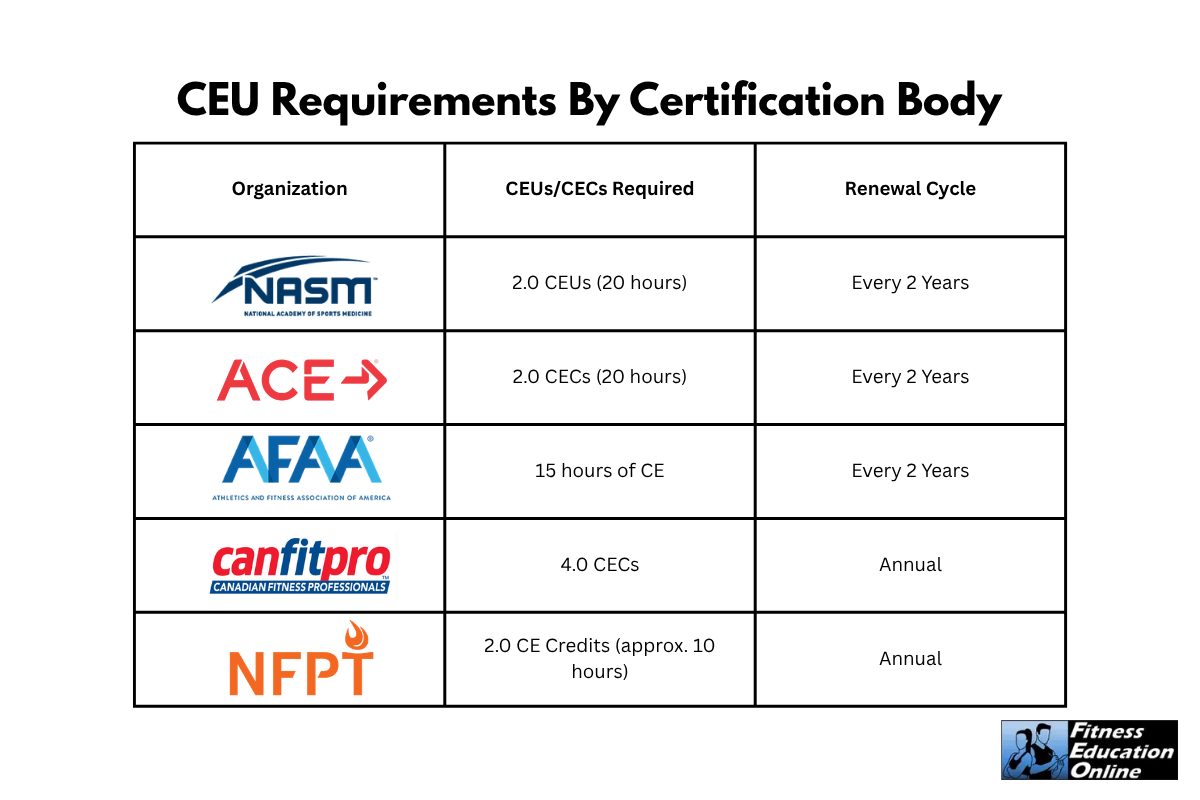
This is also set by your certifying body, for instance:
- NASM typically requires 2.0 CEUs every two years
- ACE typically requires 2.0 CEUs every two years
- AFAA usually requires between 1.5 and 2.0 CEUs
As these can also vary, it’s important to always check your specific requirements. However, the overall expectation from all providers is the same: ongoing education is necessary to keep your certification active.
How to Choose CEU Courses That Actually Help You
When you’re choosing CEU courses, it’s worth thinking about how they’ll actually show up in your coaching.
It’s easy to pick something just to meet your CEU requirements, especially when you’re up against a deadline. The best courses, though, are the ones you can take straight into your sessions and use with clients.
If you want your CEUs to actually improve your coaching, here are a few things to focus on:
- Choose Skills You’ll Use Immediately: If you can’t apply what you’re learning with your current clients, it’s probably not the right course right now.
- Match Your Direction as a Coach: Think about the type of clients you want to work with. If you’re working with general population clients, courses in mobility, fat loss, or program design will be more useful than highly niche specializations early on.
- Prioritize Practical Coaching Outcomes: Look for courses that show you how to coach, not just what to know. That includes exercise progressions, regressions, programming structure, and real-world application.
- Build Breadth First, Then Specialize: Early in your career, it’s often more useful to become well-rounded before narrowing into a niche.
Over time, the trainers who keep developing their skills tend to stand out, and that’s what drives long-term career growth. That doesn’t come from experience alone. It comes from combining experience with ongoing education.
Common Mistakes to Avoid
Just as the right approach can improve your coaching, a few common habits can limit what you get out of your CEUs. It often starts with leaving things too late, which can lead to rushed course choices that don’t add much value. From there, it’s easy to default to whatever is quickest or most convenient, rather than what will actually improve how you coach.
Over time, sticking to the same topics can also slow your development, especially if you’re not building new skills or expanding the types of clients you can work with.
Advance Your Skills and Stay Certified With Flexible CEUs
If you’re going to invest time into continuing education, it should translate directly into how you coach. That means choosing courses that improve your programming, sharpen your decision-making, and give you tools you can apply with clients.
Fitness Education Online offers CEU courses designed for working personal trainers, with options that are:
- Fully online and self-paced, so you can study when it suits your schedule
- Flexible enough to fit around your clients, sessions, and day-to-day workload
- Recognized by major certification bodies, including NASM, ACE, AFAA, and canfitpro
- Built around practical coaching, not just theory
Whether you’re building a broader skill set or focusing on a specific area, you can explore available CEUs for personal trainers that keep you certified while continuing to build your skills and progress your career.
