Looking for a Kettlebell Certification NASM recognises? Our Online Kettlebell Certification is recognised internationally with NASM, ACE, AFAA, Canfitpro + more. As these are online Kettlebell Certification courses you can complete them in the comfort of your own home, at your own pace with no time limit. On completion you will be a certified Kettlebell Instructor, a certified Kettlebell Coach and will be able to teach Kettlebell workouts to your clients.
To become a certified Kettlebell Instructor in the USA or Canada you need to complete a recognised Kettlebell course.
The two terms are often used interchangeably, however a Kettlebell “Instructor” is usually referring to a Fitness Professional who takes “classes” and a Kettlebell “Coach” is usually referring to a Fitness Professional who takes personal training clients.
Once you register for your Kettlebell course, you will be sent your log in details. You then work through the course at your own pace, watching the videos and reading the materials. At the course there is an assessment (both theory and practical). Once you submit your assessment, allow our team 3 business days to grade your assessment. Assuming your assessment is successful we will also send you over you completion certificate along with your CEUs / CECs. If unsuccessful, you are able to resubmit your assessment free of charge.
Our Kettlebell Certification Courses range from $110-$197.

Fitness Education Online are an internationally recognized CEU provider. Our courses are recognised with all the major registration bodies in the world. If you’re based in the USA, the courses are registered with NASM, ACE and AFAA. If you’re based in Canada, the courses are registered with Canfitpro. Our presenters are award winning international presenters.
NASM is considered to be a global leader in certifying fitness professionals and has been around for over 30 years. If a course is recognized by NASM – it has gone through a strict accreditation process
A Fitness Professional should complete a Kettlebell Certification course if they plan to do the following
Kettlebell Training isn’t covered in depth during your initial Personal Training Certification and therefore chances are you haven’t been trained in how to use Kettlebells. This can result in the exercises not being performed properly which leads to less benefit and increased chance of injury.
Completing a Certification ensures that you can both perform the exercises correctly yourself AND coach your clients how to perform the exercises correctly.
There are numerous advantages to completing an online Kettlebell certification
Kettlebell certification equips trainers to serve a broad spectrum of clients, from beginners to athletes. This certification:
Our kettlebell certification is a comprehensive learning opportunity for fitness professionals:
Acquiring kettlebell certification also means joining a vibrant community of fitness experts:
In the dynamic world of fitness, kettlebell training has emerged as a trend that’s rapidly gaining traction. This surge in popularity is not just a fad; it reflects a growing market demand for specialized and effective workout regimes. For fitness trainers, obtaining kettlebell certification becomes a strategic move, setting them apart in a competitive industry.
Kettlebell training is surging in popularity among fitness enthusiasts for its comprehensive benefits in strength, flexibility, and endurance. Mastering this discipline adds another skill to your toolkit because it taps into a growing trend that meets the evolving demands of a diverse clientele. It sets you apart and enables you to offer targeted solutions for weight loss, muscle toning, athletic performance enhancement, and functional strength.
Understanding the intricate techniques, safety measures, and tailored program design specific to kettlebell workouts is crucial. This boosts your ability to deliver results, opens doors to top-notch kettlebell classes and workshops, and attracts individuals seeking focused fitness regimes.
Our kettlebell course for trainers will equip you with the knowledge to help clients improve functional strength and grip strength, which are vital for daily activities. With kettlebell exercises, you’ll enhance calorie burn and improve posture among clients, making the quality of their lives better.
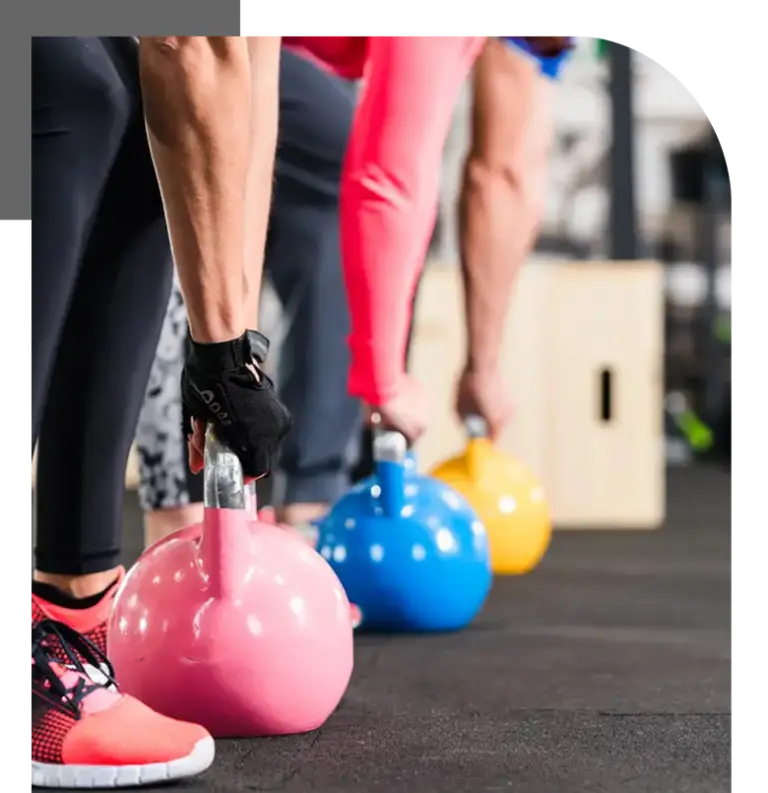
Proper kettlebell form and technique are crucial for safe kettlebell exercises and injury prevention. Follow these guidelines for key exercises:
Start with feet shoulder-width apart, hinge at hips, and grasp the kettlebell with both hands. – Keep back flat, core engaged, and shoulders pulled back. – Swing kettlebell between legs, then forcefully extend hips to propel kettlebell to shoulder height. – Maintain a strong plank position at the top of the swing, then hinge at the hips to swing the kettlebell back between the legs. – Avoid using arms to lift the kettlebell; power should come from hips.
Begin with a kettlebell between feet and hinge at hips to grasp handle with one hand. – Engage core, hike kettlebell between legs, then explosively extend hips and knees to propel kettlebell overhead. – Lock out an arm at the top of the movement, keeping the wrist straight and shoulder packed. – Lower kettlebell under control, returning to starting position. – Keep the arm close to the body throughout the movement to prevent strain on the shoulder.
– Start lying on your back with a kettlebell in one hand, arm extended toward the ceiling. – Bend the knee on the same side as the kettlebell and place the opposite arm at a 45-degree angle from the body. – Press into the floor with a bent arm and roll onto an opposite elbow, then hand, lifting the torso. – Drive hips upward into a bridge position, sliding the opposite leg under body to kneel. – Stand up while keeping your arm extended overhead, then reverse movement to return to the starting position. – Focus on stability and control throughout the movement to prevent losing balance.
Remember to start with a light kettlebell and gradually increase weight as you master proper form. Always consult with a certified trainer if you’re unsure about your technique.
Kettlebell training, like any other physically draining activity, demands specific nutrition strategies. Kettlebell workout nutrition is often overlooked, especially by beginners, so it’s your job as a trainer to ensure that your clients do not skip their pre-workout fueling routine. The quality of food that clients absorb should be personalized depending on their goals. The nutritional needs of someone who wants to lose weight are highly different from someone who wants to bulk up, gain weight, or increase their stamina.
Nutrition for post-workout recovery is also crucial, as many clients believe that working out is a license to binge after, which is actually detrimental to their goal. As a trainer, it’s your duty to educate them on the best workout nutrition practices, with a special focus on hydration, to ensure their safety at all times.
Advanced kettlebell techniques, including bottoms-up variations, complexes, and flow sequences, are highly effective for advanced trainees seeking to level up their fitness routines. Incorporating these advanced techniques challenges stability, coordination, and strength, pushing trainees to new heights in their kettlebell training journey.
Your role as a trainer includes a thorough assessment of your clients to ensure they’re ready for more advanced training. Moving them to this level too soon could be harmful to them, so you need to be absolutely sure that they are ready for this next step.
As a trainer, you can’t expect all your clients to be from the same age or fitness level. Kettlebell training can be modified for special populations like pregnant women, seniors, and individuals with mobility limitations by focusing on lighter weights, controlled movements, and exercises that accommodate their specific needs and limitations.
Kettlebell workouts for seniors emphasize balance, coordination, and joint-friendly movements can enhance overall functional fitness, while prenatal kettlebell exercises should prioritize safety and avoid exercises that strain the abdomen or compromise balance. Your role as a trainer is to take charge of the necessary kettlebell training modifications so that safety for all your potential clients can be guaranteed.
Staying ahead in the fitness industry means updating your knowledge and skills. Fitness Education Online NA’s kettlebell training certification courses will equip you with the latest methodologies and safety protocols, enhancing your credibility and marketability as a professional.
In Canada, if you want to use kettlebells with your clients, it’s recommended you complete a Kettlebell Certification course (ideally recognized by Canfitpro).

Our Kettlebell Certification Courses are broken down into three main components
Before we teach any exercises / workouts we want to make sure our students understand the science and the safety behind Kettlebell training – what are the benefits? What are the risks? Who should be doing Kettlebell training? Who shouldn’t be doing Kettlebell Training? Why would someone perform a Bent Over Kettlebell Row? Why not just do a Bent Over Barbell Row? Etc etc
Once the student understands the science and safety behind Kettlebell training we then teach all the common Kettlebell exercises. We want to make sure
Knowing all the different Kettlebell exercises is great but it doesn’t mean much if you can’t program them. So the next thing we cover is programming. We want to make sure



Level 1:
Approx 10 hours
Level 2:
Approx 11 hours
Level 1 and Level 2 Package:
Approx 21 hours

Don’t just take our word for it. Take a look at what our students (personal trainers just like you) are saying about us. Our wide range of courses, workouts, drills, and games have helped them develop exercise programs that are fun, safe, and effective.





The support that they’ve offered has been fantastic. My course is booked solid.
20 new customers & 12-16 people turning up every night of the week!